Average Reviews:

(More customer reviews)I did not. I expected to see a book with information on race engineering and how to adjust a car (or bike) to go faster. It seems that the word "engineer" here is rather loosely applied as is all too common these days. The chapter on setup was actually very good, if short and that's why I rated it as I did. The chapter on how to choose a transporter, I could really do without.
It does seem to me that if you like Carroll Smith's books, then this might have something for you. It may fit the bill of something in between. Still, I think it incomplete. It seems to be a collection of nice things a technician would want to know. There isn't the first mention of damper selection of spring setup except that someone should do it.
I quote from the book in one section on testing - it goes over a testing plan (which is quite nice and does point to how things work. Part of the plan states "adjust dampers as necessary" Well, duh - now how and why? In the review of this plan the author states:
"If the engineer was satisfied with the tire temperatures and heat spread ... he would move on to adjust the balance of the car. In this case, the engineer decided to correct the aerodynamic balance first, as opposed to the mechanical."
Nowhere does the author talk in detail about heat spread or how camber affects it, etc. There is mention of data acquisition, describing each of the sensors a bit, but no where is there any example of the data or what it might mean. I expected some analysis, but found none. I can only guess that the engineer in question is someone other than the author. I want the book by that person.
I can't bring myself to recommend any book on car setup, engineering or racing that does not discuss how to choose and adjust dampers, springs and tires. I found nothing beyond basic setup - nothing.
Click Here to see more reviews about: Hands-On Race Car Engineer
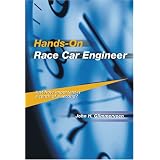
Hands-On Race Car Engineer looks at every part of the process required to make a car better than its competitors. Drivers will gain a better understanding of the dynamics of the vehicle. Race engineers will better understand the practical implications of set-up. Design engineers will gain insight into practical applications of their designs. Mechanics will better understand why engineers design things a certain way. In short, this book will help racing professionals and enthusiasts learn to recognize why they won, or lost a race - key information to continually improving and reaching the winner's circle.

Click here for more information about Hands-On Race Car Engineer

0 comments:
Post a Comment